
If you’ve ever walked down a city street, driven over a residential driveway, or stepped near a commercial parking lot, you’ve probably glanced at a manhole cover without giving it a second thought. But what you might not know is that not all manhole covers are created equal—especially when it comes to round ductile iron manhole covers, a product I’ve specialized in for over a decade as a trusted supplier. These aren’t just metal circles sitting in the ground; they’re engineered solutions that balance durability, safety, and functionality in ways that other materials and shapes simply can’t match. Let me break down what makes round ductile iron manhole covers stand out, why they’re the go-to choice for infrastructure projects worldwide, and how our range of options—including variants like self-leveling and heavy-duty models—caters to every need.
First, let’s start with the basics: ductile iron itself. Unlike traditional cast iron, which is brittle and prone to cracking under heavy load or extreme temperature shifts, ductile iron gets its name from its unique molecular structure. Small nodules of graphite embedded in the metal give it elasticity, meaning it can bend slightly under pressure instead of shattering. That might sound like a minor detail, but for manhole covers, that elasticity is a game-changer. A cover that can flex a little when a 18-wheeler drives over it won’t chip, break, or leave a dangerous gap in the road. It’s this strength-to-flexibility ratio that makes ductile iron far more reliable than steel, plastic, or gray cast iron for underground access points.
Now, why round? This isn’t a random design choice—there are concrete, engineering-backed reasons for the circular shape. The most obvious is safety: a round cover can’t fall through its opening. If you’ve ever seen a square or rectangular cover misaligned, you know the risk—if a square cover were dropped diagonally, its sides would align with the opening and it would plummet underground. Round covers? Their diameter is consistent no matter how you rotate them, so even if they’re nudged or pressed down, they can’t slip into the void below. That’s critical for pedestrians, cyclists, and drivers who rely on smooth, unbroken pavement.
Round shapes also distribute weight evenly across the manhole frame. When a heavy vehicle passes over a cover, the force is spread uniformly around the entire circumference, instead of concentrating on corners or edges (as with square models). This reduces stress on both the cover and the frame, extending the life of the installation and cutting down on maintenance costs. For our customers—city public works departments, construction firms, and property managers—this longevity translates to less frequent replacements and fewer service calls, which is always a win for budgets.
That’s where our brand-specific products come in, starting with the core round design. If you’re looking for the standard, versatile option, our Round Ductile Iron Manhole Cover is engineered to meet international standards like EN 124, which classifies manhole covers by load capacity. But we know “one size doesn’t fit all”—a parking lot at a shopping mall has different needs than a residential street, so we offer specialized variants too.
For high-traffic areas like highways, cargo terminals, or industrial zones, our Heavy Duty Ductile Iron Manhole Cover is designed to handle up to 40 tons of load, perfect for supporting big rigs and construction equipment. These covers undergo extra testing to ensure they don’t deform or crack under repeated, extreme pressure, which is why many infrastructure companies partner with us for their busiest sites.
Sometimes, the biggest issue with manhole covers isn’t their strength, but their alignment. Uneven covers are tripping hazards, they damage vehicle tires, and they create noise as cars drive over them. That’s why our Self Leveling Ductile Iron Manhole Cover is a favorite among urban planners. These covers use a pivot mechanism that automatically adjusts to sit flush with the surrounding pavement, even if the frame shifts slightly over time. No more lids sticking up or dropping down—just a smooth, seamless surface that keeps sidewalks safe and roads quiet.
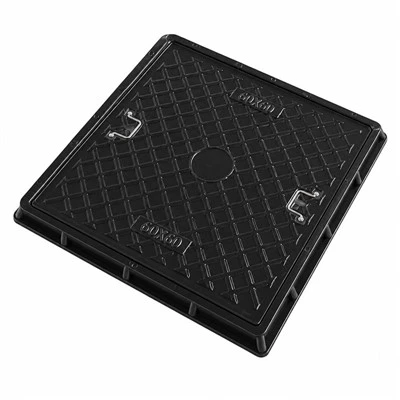
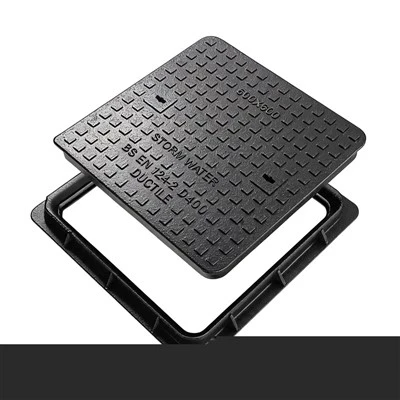
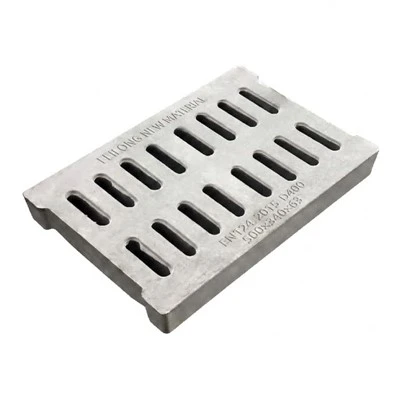
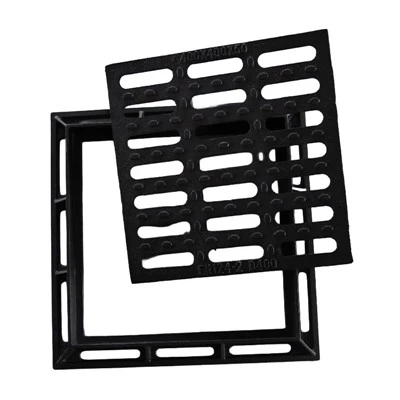
We also offer a range of Ductile Iron Access Covers for smaller underground access points, like utility vaults or water meter boxes, that don’t need the full load capacity of a manhole cover. These smaller round covers still benefit from ductile iron’s durability, but they’re lighter and easier to remove for maintenance, without sacrificing safety. It’s worth noting that we don’t just stick to round—we also supply Square Cast Iron Manhole Cover for projects where the existing frame is square, though we always advise clients to consider the safety and longevity benefits of round when designing new installations.


As a supplier, what I’ve found over the years is that customers don’t just buy a manhole cover—they invest in a product that protects their infrastructure and, more importantly, the people who use it. A cracked or misplaced manhole cover isn’t just an inconvenience; it can cause a pedestrian to fall, a cyclist to crash, or a vehicle to damage its suspension. That’s why every cover we send out undergoes rigorous quality checks: we test ductility, load capacity, corrosion resistance, and alignment before it leaves our facility. We also work with clients to match the right cover to their specific site—whether that’s a residential street in need of a medium-duty round cover, a warehouse with heavy equipment requiring our heavy-duty model, or a city sidewalk needing the self-leveling variant.
Another key advantage of round ductile iron manhole covers is their resistance to corrosion. Unlike steel, which rusts quickly when exposed to moisture and road salt, ductile iron has a natural resistance to wear from the elements, and we add a protective coating to every cover we manufacture. That means less degradation over time, even in harsh climates where roads are treated with salt in winter or areas with high humidity. For cities in coastal regions, this is especially valuable, as salt air accelerates metal corrosion—our covers hold up far better than alternative materials in those conditions.
I’ve seen too many projects cut corners by using cheap, brittle cast iron or plastic covers only to regret it a few years later when covers crack, fall through, or need urgent replacement. Our approach is different: we prioritize long-term value over short-term cost savings. A round ductile iron manhole cover might have a higher upfront price, but its 30+ year lifespan (compared to 10-15 years for lower-quality alternatives) means lower total costs over time. Plus, when a cover does need replacing, its uniform round shape means there’s less waste during removal and installation, making it a more environmentally friendly choice too.
If you’re planning a construction project, managing a municipal infrastructure network, or just need replacement covers for your property, I’d be happy to help you find the right product for your needs. Whether you’re looking for a standard round cover, a self-leveling option for sidewalks, or a heavy-duty model for industrial use, our team can walk you through the specs, answer questions about installation, and ensure you get a product that meets all safety and industry standards.
Ready to discuss your manhole cover needs? Reach out to our team to connect on procurement, ask for a custom quote, or learn more about how our round ductile iron solutions can benefit your next project.
References
- American Society for Testing and Materials (ASTM). (2020). Standard Specification for Ductile Iron Castings. ASTM A536-20.
- European Committee for Standardization (CEN). (2019). Performance Requirements for Manhole Covers and Gully Grates. EN 124:2019.
- National Association of City Transportation Officials (NACTO). (2021). Urban Street Design Guide: Underground Infrastructure Safety.
- The World Bank. (2018). Durable Infrastructure Materials: A Guide for Municipal Projects.
- Ductile Iron Society. (2022). Ductile Iron: Properties and Applications in Infrastructure.