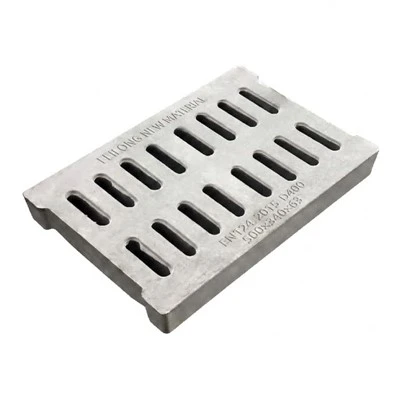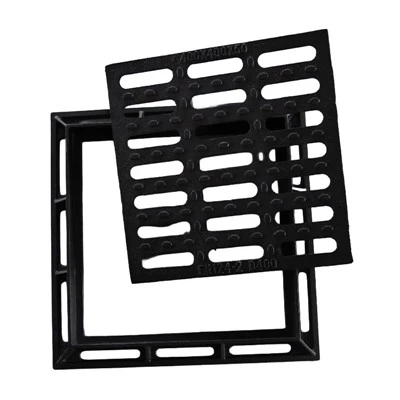

If you’ve ever walked down a city street, navigated a parking lot, or driven on a residential road, you’ve likely passed manhole covers and access point covers—quiet, unassuming components that play a critical role in infrastructure. For our team as a D400 ductile iron covers supplier, one question comes up again and again from municipal engineers, construction contractors, and property managers: What is the corrosion resistance rating of D400 ductile iron covers? It’s not a trivial question; a cover that rusts or degrades prematurely can lead to safety hazards, costly repairs, and even infrastructure failures that disrupt entire communities. Today, I’m breaking down the science behind D400 ductile iron corrosion resistance, how it’s tested, and what that means for anyone specifying these covers for their projects.
First, let’s ground ourselves in what D400 even means. The “D” stands for ductile iron, a material chosen for manhole and access covers for decades because it combines the strength of cast iron with the flexibility and impact resistance of steel. The number “400” refers to the load capacity rating: D400 covers are designed to withstand a maximum load of 400 kilonewtons (kN), which translates to roughly 40 metric tons—enough to support heavy trucks, buses, and even delivery vehicles on high-traffic roads, parking garages, and industrial areas. But load capacity is only half the story; corrosion resistance is what ensures that strength holds up over 20, 30, or even 50 years of exposure to the elements, road salts, chemicals, and moisture.
Corrosion, simply put, is the gradual deterioration of metal through chemical reactions with its environment. For ductile iron, the main culprit is oxidation: when iron reacts with oxygen and water, it forms iron oxide (rust), which weakens the metal’s structure over time. For manhole covers, this is particularly problematic because they’re exposed to a range of corrosive agents that aren’t just water or air. Road salts used to melt ice in winter are a major one—sodium chloride, calcium chloride, and magnesium chloride accelerate rust formation by carrying moisture into the metal’s pores. Industrial areas might have air or soil contaminated with acids or alkalis, while coastal regions face saltwater spray that’s far more corrosive than freshwater.
So what’s the actual corrosion resistance rating for D400 ductile iron covers? The answer isn’t a single number you’ll find on a sticker, but a combination of standardized testing methods, material composition, and protective coatings that go into every cover we manufacture. Let’s start with the material itself. Ductile iron gets its name from the graphite nodules formed during the casting process, which make it stronger and more corrosion-resistant than traditional gray cast iron. Unlike gray cast iron, which has flat graphite flakes that create cracks and pathways for corrosion to penetrate, ductile iron’s round graphite nodules distribute stress evenly and create a more uniform structure that resists rust spread.
When we produce our D400 covers, we start with a high-grade ductile iron alloy formulated specifically for outdoor infrastructure, with additional elements like silicon and chromium that boost corrosion resistance. But even the best base metal won’t hold up if left exposed to the elements. That’s why we apply a double-layer protective coating to every D400 cover, a process that’s been tested and validated through industry standards like ISO 9001 and EN 124. EN 124 is the European standard that classifies manhole covers by load capacity, and within that standard, corrosion resistance is tested using a salt spray (neutral salt) test, a common industry method to simulate long-term exposure to corrosive conditions.
In salt spray testing, coated D400 ductile iron covers are placed in a chamber that sprays a 5% sodium chloride solution continuously for a set number of hours. The longer a cover can resist rusting (measured by the appearance of red rust on the surface), the higher its corrosion resistance rating. For our D400 covers, we routinely subject them to 1,000 hours of salt spray testing with no more than a 5% red rust coverage on any surface area—far exceeding the minimum requirement for heavy-duty infrastructure. To put that in perspective, 1,000 hours of salt spray testing is equivalent to about 10 years of typical exposure to road salts and atmospheric moisture in a temperate climate. For coastal areas or regions with heavy winter salting, we offer an optional three-layer polyurethane coating that pushes that resistance to 2,000+ hours, which translates to 20+ years of heavy corrosive exposure.
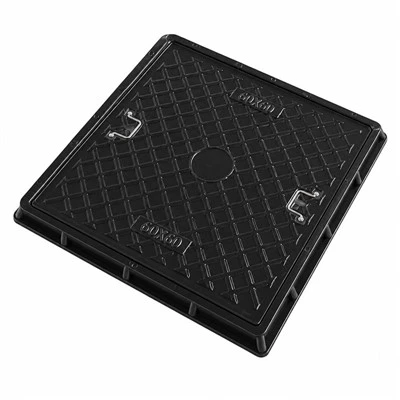
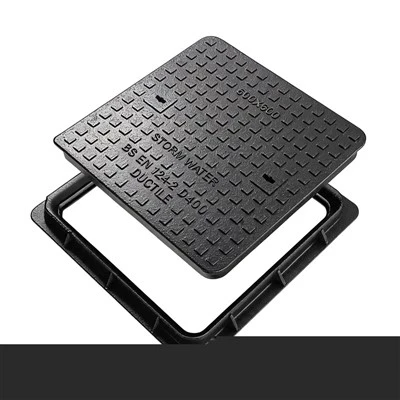
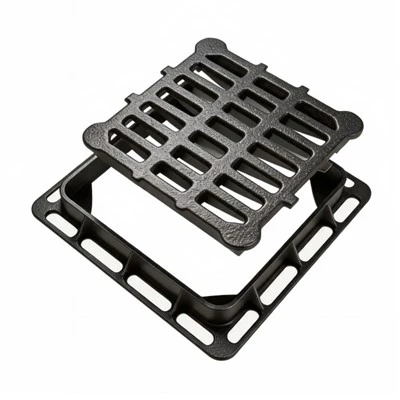
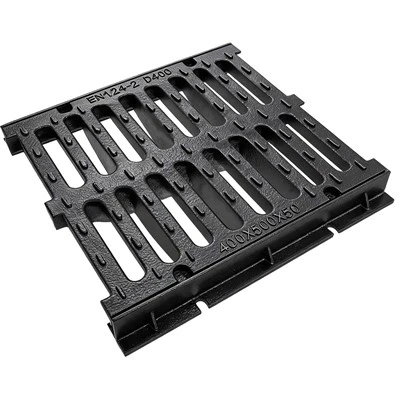
This isn’t just internal testing, either. Many municipalities and contractors require third-party verification, and all of our D400 ductile iron covers come with certification from independent testing labs like Intertek or SGS, confirming their corrosion resistance rating meets or exceeds EN 124 Class D standards. For anyone looking for specific product options, we offer a range of designs tailored to different use cases, from the versatile square cast iron manhole cover that’s ideal for urban sidewalks and parking lots, to the round ductile iron manhole cover that’s often preferred for roadways and heavy industrial sites. We also carry ductile iron access covers for utility lines and smaller access points, as well as heavy duty ductile iron manhole covers designed for the highest traffic areas, and ductile iron cover and frame sets that are precision-machined to eliminate gaps and prevent tripping hazards.
A common mistake people make when choosing manhole covers is prioritizing load capacity over corrosion resistance, assuming that a cover that can hold 40 tons will last forever. But a D400 cover with a poor coating will rust through in 5 to 10 years, requiring costly replacement that disrupts traffic and utility services. On the other hand, a D400 cover with a high-quality corrosion coating will last 30 to 50 years, making it a far more cost-effective investment over the long term. That’s why we always walk our clients through both factors when they reach out—we don’t just sell a product, we help them choose a cover that will meet their needs for decades.
Let’s look at a real-world example to put this into context. A few years ago, we worked on a municipal project in northern Michigan, where road salts are used heavily in winter and temperatures drop well below freezing for months. The city originally planned to install cheaper cast iron covers that would only last 8 years, but after we explained the corrosion resistance rating of our D400 ductile iron covers—their ability to withstand 1,000+ hours of salt spray testing—they opted for our standard coated D400 covers. The city saved money in the long run because they didn’t have to budget for repeated replacements, and the covers are still in perfect condition 15 years later, with only minimal surface discoloration and no structural rust.
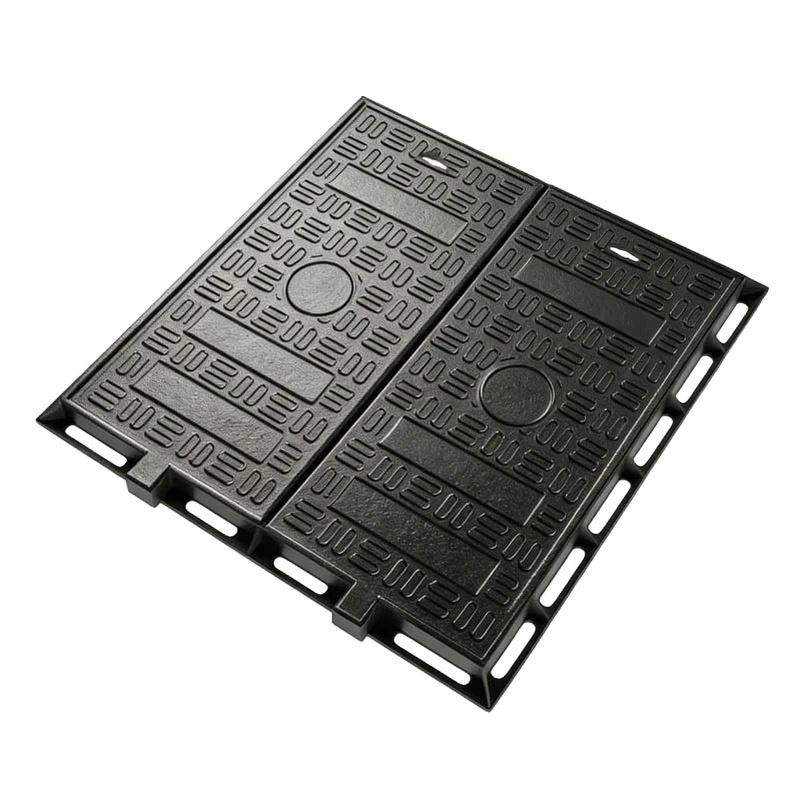
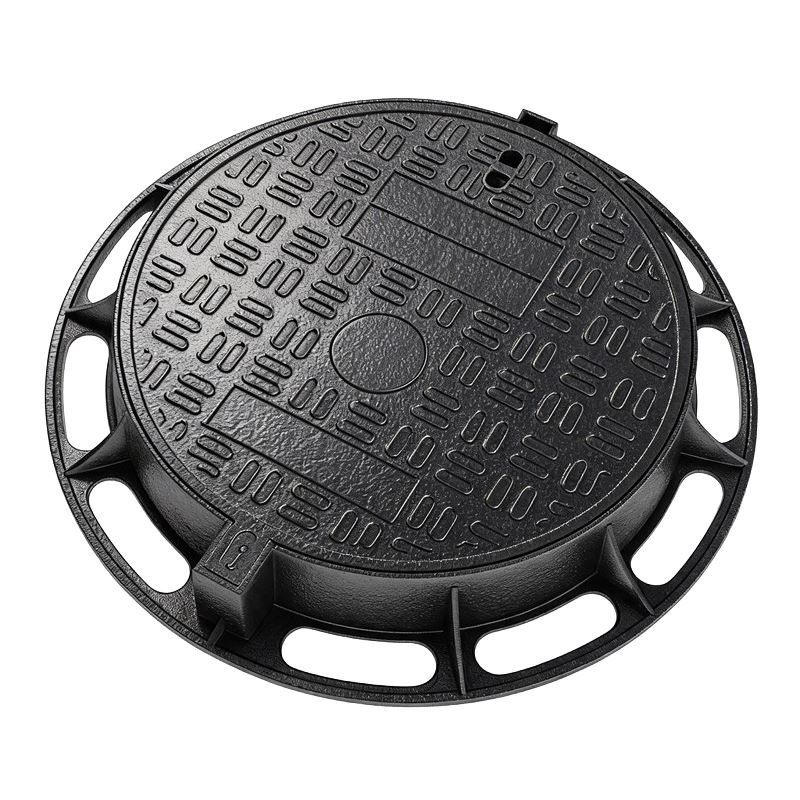
Another example is a coastal construction project in Florida, where saltwater spray and high humidity create extremely corrosive conditions. The contractor initially considered standard D400 covers, but we recommended our upgraded three-layer coated D400 covers, which offer 2,000 hours of salt spray resistance. The project is still ongoing, but after 5 years, the covers show no signs of rust or degradation, which would not have been the case with a standard coating.
Now, it’s important to clarify what corrosion resistance rating means in practical terms, rather than just lab numbers. A D400 ductile iron cover with a 1,000-hour salt spray rating is suitable for almost all standard heavy-duty applications: urban roads, parking lots, residential streets, utility access points, and industrial areas that aren’t in extreme coastal or heavy industrial zones. For these use cases, you won’t need to worry about premature corrosion as long as the cover is installed correctly (with proper drainage around the base to prevent standing water, another common cause of corrosion). For extreme environments—like saltwater coastal roads, areas with chemical runoff, or heavy industrial sites with acids or alkalis—our upgraded coating options provide the extra corrosion resistance needed to extend the cover’s lifespan.
If you’re in the market for D400 ductile iron covers, or want more information about our corrosion resistance testing and product lines, you can explore our full range online: square cast iron manhole cover, ductile iron access covers, heavy duty ductile iron manhole cover, ductile iron cover and frame, and round ductile iron manhole cover. Each product page includes detailed specs on load capacity, corrosion resistance, and coating options, so you can find the right fit for your project.
We also work closely with engineers and contractors to customize covers if you have specific requirements, whether that’s adding unique markings for utility companies, adjusting the size for narrow access points, or upgrading coating for a particularly corrosive environment. Our team has decades of experience in the infrastructure industry, and we’re here to answer any questions you might have about corrosion resistance, load capacity, or installation best practices.
When you’re choosing manhole and access covers, it’s easy to overlook corrosion resistance in favor of upfront cost, but it’s one of the most important factors in the long-term performance and safety of your infrastructure. A D400 ductile iron cover with a proven corrosion resistance rating isn’t just a purchase—it’s an investment in a component that will keep roads, parking lots, and utility services safe and functional for decades. If you’re ready to discuss your project needs and explore which D400 cover is right for you, we encourage you to reach out for a consultation.
References
- European Committee for Standardization. (2015). EN 124:2015, Glass-reinforced plastics manhole covers for surface drainage systems. Brussels, Belgium: CEN.
- International Organization for Standardization. (2020). ISO 9001:2015, Quality management systems — Requirements. Geneva, Switzerland: ISO.
- American Society for Testing and Materials. (2018). ASTM B117-19, Standard Practice for Operating Salt Spray (Fog) Apparatus. West Conshohocken, PA: ASTM International.
- Ductile Iron Society. (2022). Ductile Iron for Infrastructure Applications: Corrosion Resistance and Performance. Cleveland, OH: Ductile Iron Society.
- Municipal Engineers Association. (2021). Guide Specifications for Manhole Covers and Access Frames. Chicago, IL: MEAC.