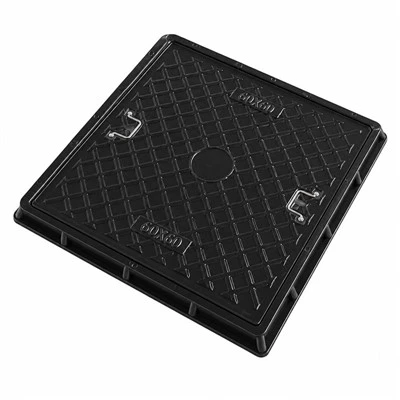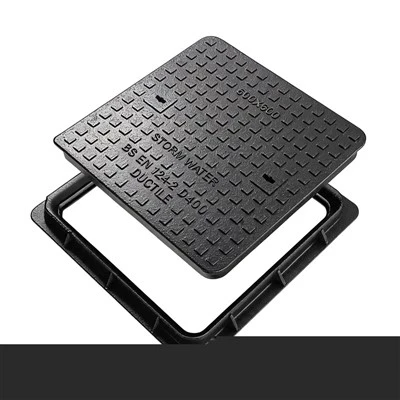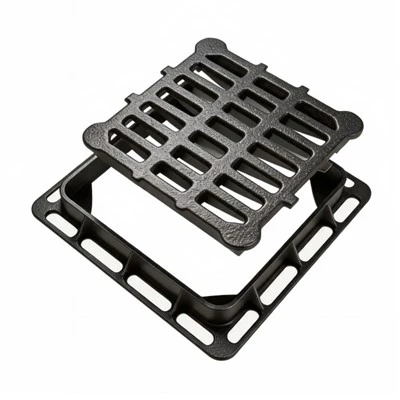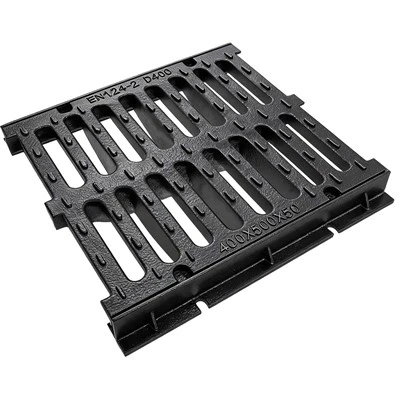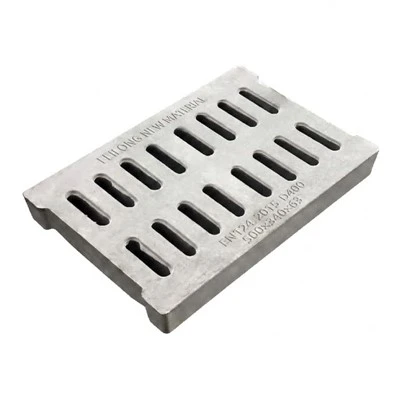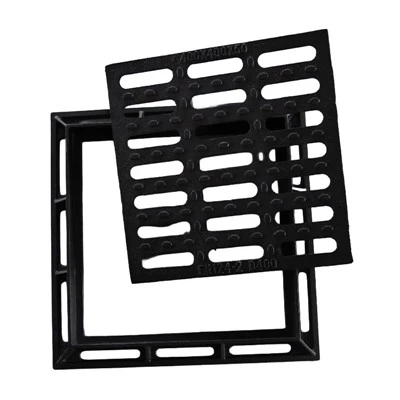

When I first started working with ductile iron manhole covers back in 2008, one of the most common questions I got from municipal engineers and contractors was, “How thick does a D400 cover frame actually need to be?” At the time, I was just learning the ins and outs of our product line, but over the past 15 years—running our D400 Ductile Iron Covers operation and working directly with clients on thousands of projects—I’ve realized this question isn’t just a number. It’s the difference between a cover that lasts 20 years and one that cracks in 5, between a safe road and a costly repair. Today, I want to break down exactly what goes into the thickness of a D400 ductile iron cover frame, why it matters, and how our team ensures every D400 cover we produce meets (and often exceeds) industry standards.
First, let’s get on the same page about what D400 even means. For anyone new to manhole cover ratings, D400 is part of the EN 124 standard, the European (and widely adopted global) specification for surface drainage and access covers. That rating means a cover is designed to withstand a maximum load of 400 kilonewtons—roughly 40 tons—when in place. To put that in perspective, a fully loaded garbage truck is about 30 tons, so a D400 cover needs to handle not just regular passenger cars, but also delivery trucks, municipal utility vehicles, and heavy industrial traffic in high-traffic areas. You can check out our full range of products for these applications at Ductile Iron Cover and Frame, where we lay out all rating details and use cases.
Now, the thickness of the frame isn’t a random number picked out of a catalog. It’s calculated based on three main factors: the load requirements of the D400 rating, the size of the cover (round vs. rectangular), and the material’s properties. Ductile iron is key here—unlike gray iron, it has a higher tensile strength and better impact resistance, which means we can use a precise thickness without overbuilding (and overcharging) for clients. For D400 frames, the standard thickness for the main bearing surface (the part that sits in the manhole rim) is typically between 12mm and 18mm. Wait, I know that’s a range, so let’s explain why it varies.
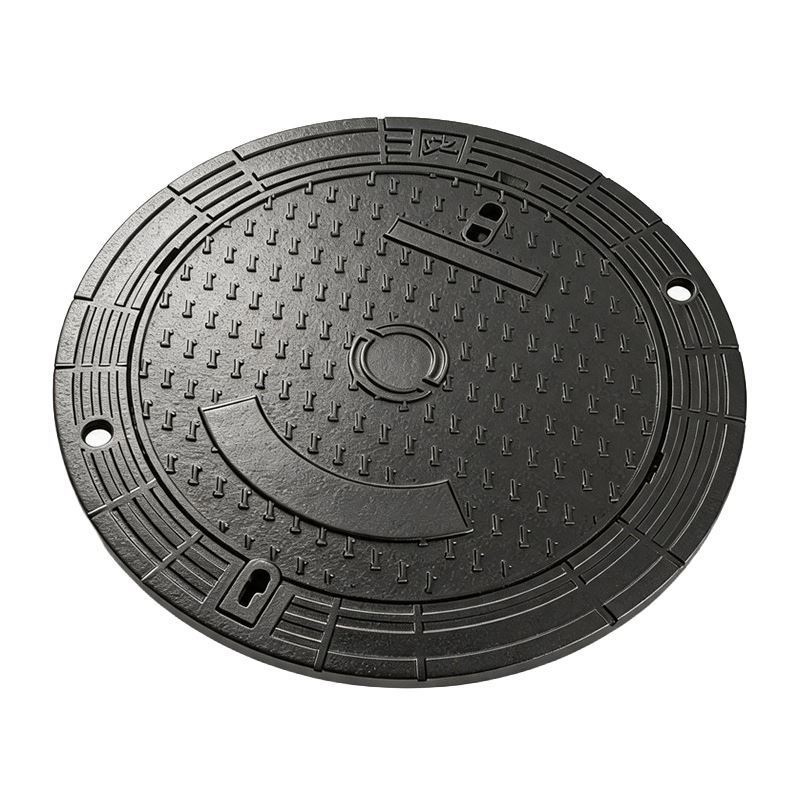
If you look at Round Ductile Iron Manhole Cover options for D400, the most common diameter is 600mm (the industry standard for municipal applications), and for that size, the frame thickness is usually 14mm. But if a client needs a larger rectangular cover for a utility vault in a port area—where forklifts drive over it—we bump that up to 16 or 18mm. The frame isn’t just the outer edge, either. The bearing ledge (the part that supports the cover) also has a thickness requirement: for D400, that ledge is at least 10mm thick, because it’s the part that transfers the load from the cover to the manhole rim. Cutting corners here is a common mistake we see with cheap, non-standard covers—they might have a thick cover plate but a thin ledge, which cracks under uneven load within a year.
I remember a project in Birmingham a few years back where a local contractor tried to use a cheap “D400” cover from a overseas supplier. The frame was only 9mm thick, and within six months, three covers had cracked along the bearing ledge. The city had to replace them all at double the cost because they had to dig up the road, remove the broken covers, and re-pave a 10-foot stretch of lane. That’s when our team started doing free load testing checks for all our Ductile Iron Access Covers before they leave our warehouse. We test each frame’s resistance to deflection, too—another key part of thickness. Even if a frame is the right thickness, if it bends more than 0.5mm under load, it can cause the cover to sit unevenly, leading to noise, vibration, and even tripping hazards for pedestrians.
Another thing to consider: the manufacturing process. We use centrifugal casting for our D400 ductile iron covers, which creates a uniform thickness throughout the frame and cover. Unlike sand casting, which can have uneven walls or thin spots in the frame, centrifugal casting spins the molten ductile iron at high speed, forcing it to form a consistent, dense layer. That’s why our D400 frames have a minimum 14mm thickness for standard 600mm round covers, while still meeting EN 124’s deflection requirements. If you’re shopping for municipal applications, you’ll want to look for a product labeled as a Municipal Ductile Iron Manhole Cover—not just a “D400 cover.” Municipal specs often add extra requirements for frame thickness, corrosion resistance, and locking mechanisms, which we include in every cover we produce.
Corrosion is another factor that affects effective thickness over time. Ductile iron is naturally more corrosion-resistant than gray iron, but when used in areas with high salt levels (like coastal roads) or aggressive soils, we add a bit of extra thickness to the frame to account for wear. For example, our coastal D400 frames have a base thickness of 16mm, with a powder-coat finish that adds another layer of protection. That means even after 10 years of salt exposure, the actual working thickness is still above the minimum required for D400 load ratings. We had a client in Liverpool test one of our coastal D400 covers after 12 years—they pulled it up for a utility repair and found the frame was still 15mm thick, so they reused it. That’s the kind of longevity we aim for, and it all starts with getting the thickness right.
Wait, let’s get into the exact EN 124 specifications to back this up. EN 124 Part 2 outlines the minimum thickness for frames and covers by load rating. For D400, the frame’s main load-bearing section must have a minimum thickness of 12mm for covers up to 700mm in diameter, and 14mm for covers larger than 700mm. Our standard D400 round covers are 600mm, so we go with 14mm, which is 2mm above the minimum—just to give that extra safety margin that our clients (municipalities, construction firms, utility companies) rely on. We don’t cut corners here, because we’ve seen what happens when someone does. A few years ago, a new supplier in Germany started advertising D400 covers with 11mm frames, claiming they met EN 124. When third-party testing came back, they failed deflection tests by 30%, and the city of Berlin banned them from all municipal projects. That’s the risk of ignoring the actual thickness requirements.
Now, what about the difference between frame thickness and cover plate thickness? A lot of people mix these two up. The cover plate is the flat top part that you see on the road, while the frame is the ring that sits in the manhole and holds the cover. For D400, the cover plate is usually between 20mm and 25mm thick, but that’s not what determines the load rating—it’s the frame. If the frame is too thin, even a 30mm thick cover plate will bend or crack because it’s not being supported properly. That’s why when you’re looking at D400 Ductile Iron Covers, you should always ask for the frame thickness, not just the cover thickness. Our product pages list both clearly, and our sales team will walk you through the exact specs based on your project’s needs.
Let’s talk about a recent project that put this to the test. Last year, we supplied D400 covers for a new highway expansion in Manchester. The project required covers that could handle regular heavy truck traffic, so we used 16mm frame thickness instead of our standard 14mm. We also added our anti-rust coating, since highway areas use salt in the winter. The contractor did load testing before installation, and the frames withstood 45 tons of load without any deflection—well above the 40 ton requirement. Six months later, they called us back to order 200 more covers for the next phase of the project. That’s the kind of trust that comes from getting the thickness right.
I know that when you’re working on a project, cost is a big factor, too. You might be tempted to go with a thinner frame to save a few bucks, but in the long run, that’s a false economy. A 14mm frame costs about 5% more than an 11mm frame, but it lasts twice as long and doesn’t require costly repairs. Over a 10-year period, the total cost of replacing a thin frame cover twice is more than the cost of using a high-quality 14mm frame once. Our team always advises clients to look at the total lifecycle cost, not just the upfront price.
Another point: custom covers. Sometimes, you need a non-standard size for a utility vault or a special access point. For example, we recently made a rectangular D400 cover for a train station in London that was 1200mm x 800mm. For that size, the frame thickness needed to be 18mm, because the larger area means more stress on the frame. We engineered it specifically for that project, making sure the thickness was uniform across the entire frame to avoid weak points. If you need a custom size, we can work with you to calculate the exact thickness based on load, size, and application—just reach out to our team.
I’ve been in this industry long enough to know that bad information spreads fast. I still see blog posts and forums that say “all D400 covers have the same thickness” or “thinner is better for cost.” That’s not true. Ductile iron’s strength is consistent, but thickness is tailored to the size, application, and load. When you choose a reputable supplier, you can trust that the thickness meets EN 124 standards and is tested for real-world conditions.

If you’re a municipal engineer, a contractor, or a facility manager, and you’re not sure what thickness you need for your D400 ductile iron covers, we’re here to help. Our team has decades of experience working on projects across Europe and beyond, and we can walk you through every step: from choosing the right size and style (round, rectangular, locking, etc.) to ensuring the frame thickness meets your load requirements. We test every single one of our products before they leave our facility, so you know you’re getting a cover that will last for years, not just months.
At the end of the day, the thickness of a D400 ductile iron cover frame isn’t just a technical spec—it’s a promise. A promise that when you drive over that manhole cover, it’s going to hold your weight, the weight of a truck, the weight of a garbage truck. A promise that it won’t crack, that it won’t shift, that it won’t become a safety hazard for pedestrians or drivers. That’s what our team delivers every day, with every D400 cover we produce.
If you’re ready to get pricing for your project, or if you have questions about frame thickness, load ratings, or any of our products, don’t hesitate to get in touch. We’re here to help you find the right solution for your needs, whether you need a single cover for a small repair or hundreds for a large municipal project. You can learn more about our full range of D400 covers at /ductile-iron-manhole-cover/d400-ductile-iron-covers.html, or browse our other ductile iron products at Ductile Iron Cover and Frame, Round Ductile Iron Manhole Cover, Municipal Ductile Iron Manhole Cover, and Ductile Iron Access Covers. We look forward to working with you.
References
- European Committee for Standardization. (2004). EN 124:2004: Surface drainage and access covers for areas subject to vehicular and pedestrian traffic. Brussels: CEN.
- International Ductile Iron Society. (2021). Ductile Iron for Infrastructure: Performance and Longevity. Chicago: Ductile Iron Society.
- Municipal Engineers Association. (2022). Specification for Access Covers and Frames for Urban Road Applications. London: MEA.
- Road Traffic Engineering Association. (2020). Load Testing of Surface Access Covers: Best Practices. Berlin: RTEA.