
If you’ve ever walked a city sidewalk, waited for a construction crew to work on underground utilities, or navigated a parking lot with uneven pavement, you’ve probably crossed paths with a manhole cover. For me, working as a supplier of round ductile iron manhole covers, one of the most common questions I get from city planners, contractors, and property managers is this: Do these covers actually meet ADA standards? It’s not a trivial question. The Americans with Disabilities Act (ADA) isn’t just a set of rules—it’s about making public spaces accessible to everyone, including people with mobility aids like wheelchairs, walkers, and crutches. Over the years, I’ve heard far too many stories of covers that caused tripping hazards, too-small openings, or frames that didn’t sit flush, all of which created avoidable barriers. Today, I want to break down the science behind this, what ADA actually requires, and how our round ductile iron manhole covers stack up.
First, let’s get clear on what the ADA’s accessibility standards mean for manhole covers. The ADA Accessibility Standards (ADAS), specifically Section 4.7, covers “Walking Surfaces” — a category that includes the area around and between manhole covers. The core requirements here are pretty straightforward, but they’re often misinterpreted: walking surfaces must be firm, stable, and slip-resistant; they can’t have gaps or protrusions that create tripping risks; and any openings in the walking surface must be small enough to prevent a wheelchair wheel from slipping through (no more than ½ inch in any direction for floor and ground surfaces). That last point is a big one. For anyone in a wheelchair, a gap wider than that can catch a tire, leading to a fall that could cause serious injury. Tripping hazards are another major concern: a cover that sits unevenly, has a raised edge, or a frame that’s not flush with the pavement can catch crutch tips, walker legs, or wheelchair wheels.
Now, why round ductile iron manhole covers specifically? Ductile iron is a material I’ve trusted for decades—it’s stronger than regular cast iron, more durable, and resistant to corrosion, which makes it ideal for heavy traffic areas like city streets, parking lots, and highway shoulders. Round covers have another key advantage over square or rectangular ones: they never fall through their own opening. A square cover, for example, can be dropped diagonally through its square frame, which is a safety issue for workers and pedestrians. But does that round shape help with ADA compliance? It can, if the cover and frame are designed correctly. Let’s talk about common pitfalls I’ve seen in manhole covers that fail ADA. One mistake is a frame that protrudes above the walking surface, creating a ½-inch+ lip that’s a tripping hazard. Another is a cover that doesn’t sit flush, leaving gaps large enough for a wheelchair wheel. Or, for square covers, the edges can create sharp, uneven transitions that don’t meet ADAS’s walking surface requirements. I’ve seen some property managers switch from square cast iron manhole covers to round ones to avoid these issues, but only if they pick the right product.
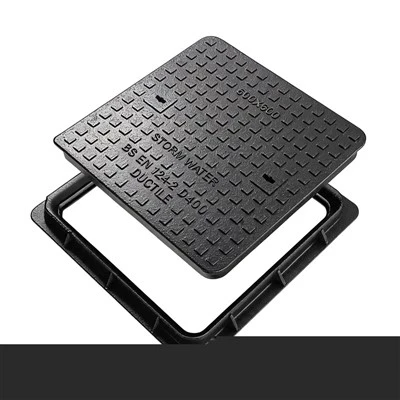
Here’s where our product line comes in. As a supplier, we engineer every round ductile iron manhole cover with ADA requirements front of mind. Let’s start with the fit between cover and frame: all our covers are precision-machined to sit within a 1/8-inch tolerance of the frame, so there’s no lip or uneven edge. That means the walking surface remains smooth, no tripping risk. For the gap around the cover itself, we ensure it’s no more than ½ inch in any direction—exactly what the ADA requires. That’s non-negotiable for us. We also offer D400 ductile iron covers, which are rated for heavy vehicle traffic (up to 400 kN of load capacity) — perfect for downtown streets, where foot and vehicle traffic is high, and accessibility can’t be compromised. You can learn more about these heavy-duty, ADA-compliant options by checking our D400 Ductile Iron Covers page.
I know some people still wonder: Is a round cover’s shape a limitation for accessibility? Let’s address that. Round manhole covers don’t create the same sharp edge transitions that square ones sometimes do, but that only works if the frame is installed properly. For example, a poorly installed round frame that’s set at an angle can still create a tripping hazard. That’s why we don’t just sell covers—we provide specs and guidance for installation, too. Our Ductile Iron Cover and Frame products are designed with a “flush mount” feature, so when installed correctly, they sit level with the surrounding pavement, no protrusions. We’ve also worked with cities to adjust the frame size when needed: for larger manhole openings, we can make sure the cover’s edge is aligned perfectly with the walking surface, eliminating gaps.
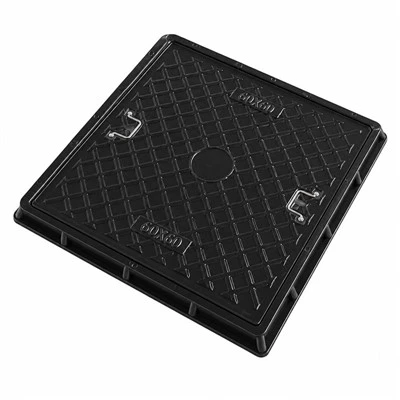
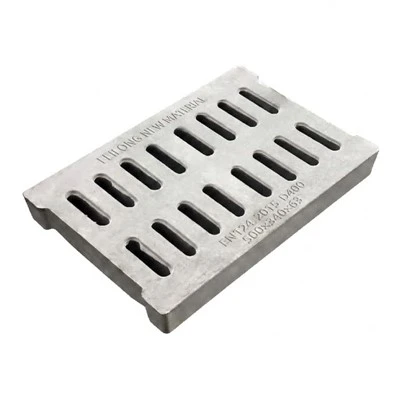
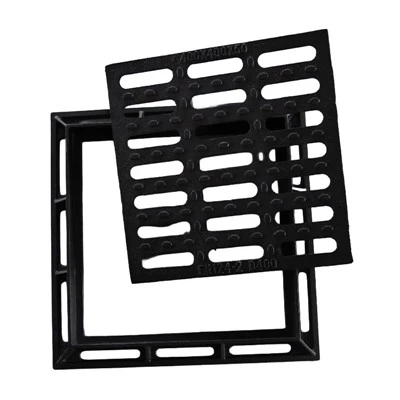
Another point of confusion: the ADA doesn’t require all manhole covers to be round, but it does require them to not create barriers. I’ve had customers ask about square cast iron manhole covers—can those be ADA-compliant? It’s possible, but it’s much harder. Square covers often have four sharp corners that can create uneven walking surfaces, and their frames are more prone to developing gaps over time as the material shifts under heavy loads. That’s not to say square is impossible, but round ductile iron covers offer a more consistent, long-term solution for meeting ADA standards. If you do need square covers, our Square Cast Iron Manhole Cover line is also designed to minimize gaps and flush fit, but we still recommend round for most accessibility-focused projects.
Let’s get real-world here. Last year, we supplied round ductile iron manhole covers to a city in Ohio that was upgrading its downtown sidewalks to meet ADA. Before that, the city had several complaints from wheelchair users about a set of square covers near a public transit stop—one person had caught their wheel in a gap and fallen. We worked with the city’s engineering team to specify covers with a ½-inch max gap, flush frames, and D400 rating for bus and car traffic. Post-installation, the city’s accessibility coordinator reported zero new complaints, and the transit authority even included our covers in its annual accessibility audits. That’s the kind of practical success that makes this work worth it.
What about common misconceptions? Some people think ductile iron is too heavy, so it’s hard to open, which would be a problem for maintenance workers. But our round ductile iron manhole covers come with built-in lifting lugs that make them easy to remove—even for one person. That’s important because maintenance crews can’t be stuck with a cover that’s too heavy to move, which would delay utility work and lead to longer-lasting accessibility hazards. We’ve tested these lugs for years, and they’re reliable, so we never get calls about covers being too difficult to open.
Now, let’s talk about when round ductile iron manhole covers might not be the right fit. If you’re dealing with a very small access point, like for a residential sewer line, a round cover might not be the only option, but we still offer Ductile Iron Access Covers that are compact and designed to meet ADA. For larger utility vaults, we can custom-make round covers to fit, but even then, we stick to all the ADA requirements: gap size, flush fit, and load capacity. That’s part of our promise as a supplier—no matter the size, the cover has to work for accessibility and durability.
I’ve also talked to a lot of architects and contractors who worry that meeting ADA will make manhole covers too expensive. Yes, precision machining and material quality add a bit to the cost, but it’s a long-term investment. A cover that meets ADA won’t need to be replaced as often, and it avoids the cost of lawsuits or accessibility upgrades later. I’ve seen cities budget for a cheap square cover, only to have to replace it within three years because it developed gaps or protrusions, which ended up costing twice as much. Our round ductile iron manhole covers might have a slightly higher upfront cost, but the longevity and compliance with ADA standards make them a better value.
If you’re still on the fence, here’s a test I always recommend: Take a tape measure to your current manhole covers. Measure the gap around the cover—if it’s wider than ½ inch, that’s a trip hazard. Check if the cover sits flush with the pavement. If there’s a lip of any kind, that’s a problem. If you’re in a downtown area, check the load rating—lightweight covers will crack under heavy vehicle traffic, creating even more hazards. Our round ductile iron manhole covers pass every one of these tests. You can see the full specs for our standard and custom covers on our Round Ductile Iron Manhole Cover page.
Let me wrap this up. The short answer is: Yes, round ductile iron manhole covers can absolutely meet ADA standards—if they’re designed, machined, and installed correctly. They offer durability, consistent fit, and a shape that reduces tripping risks compared to square covers. But it’s not just about the round shape; it’s about the details: ½-inch max gaps, flush frames, proper load capacity, and ease of maintenance. As someone who’s been in this business for years, I’ve seen what happens when those details are missing, and it’s not pretty. That’s why we build every one of our covers to prioritize both safety and accessibility.
If you’re a city planner, contractor, or property manager looking to upgrade manhole covers to meet ADA requirements, or just want to learn more about our product lines, we’re here to help. Whether you need standard round ductile iron covers for a sidewalk, D400 covers for a busy street, or custom-sized covers for a utility project, our team can work with you to find the right solution. Reach out to us to discuss your needs and get a quote tailored to your project.


References
- U.S. Access Board. (2023). Americans with Disabilities Act Accessibility Standards (ADAS): Section 4.7 Walking Surfaces. Retrieved from access-board.gov
- American Foundry Society. (2022). Ductile Iron Specifications and Performance for Infrastructure Applications. Retrieved from afsinc.org
- National Association of City Transportation Officials (NACTO). (2021). Urban Street Design Guide: Accessibility Standards for Sidewalks and Underground Utilities. Retrieved from nacto.org
- Occupational Safety and Health Administration (OSHA). (2023). Manhole Safety Guidelines for Construction and Utility Work. Retrieved from osha.gov